


Sleep isn’t just essential for kids it shapes the well-being of the entire family. When children enjoy 9–12 hours of restorative sleep, their growth, immune health, learning, memory, and mood thrive. Parents, too, rely on quality rest to stay emotionally stable, handle stress, and maintain health.
Here are five big mistakes that you're probably making as a parent that are ruining your child's sleep.
If the problems persist even after solving them, then consulting a top pediatrician like those at Pristine Pediatric Services for infants and children can ease them, especially if you’re looking for experienced care nearby.
SLEEP MISTAKE 1: The Forbidden Zone
Just before bedtime, often an hour or two beforehand, your once-tired child suddenly bursts with energy. You might see them running laps around the living room, giggling at nothing, or launching into tickle or pillow wars.
What is the Forbidden Zone?
This is when the circadian alerting system (part of the internal body clock) peaks and temporarily overrides the growing sleep pressure. Sleep scientists refer to this as the “wake maintenance zone,” and it’s nearly impossible for children to settle down during this time.
Two biological processes interact here:
- Homeostatic sleep drive: Sleep pressure builds all day.
- Circadian alerting rhythm: Signals “stay awake” periodically.
What Parents Often Do (and Why It Doesn’t Work)
- Trying calming rituals (books, lullabies). It causes the Kid’s brain to actively resist sleep
- Forcing early bedtime - Leads to bedtime battles
- Labelling it “overtiredness”: misreading the signal keeps bedtime conflictual
(Involve a paediatrics provider if bedtime battles persist or other sleep issues arise.)
SLEEP MISTAKE 2: The Temperature Trap
The Mistake
Many parents crank up the heat, thinking a warm, cozy bedroom promotes sleep. In reality, it hinders sleep onset and quality.
Why It Matters?
Natural cooling triggers sleep: A drop in body temperature prompts melatonin release, whereas overheating blocks that signal. Keeping the temperature too warm causes tossing, early waking, and reduced deep sleep.
Pediatric sleep specialist advice: room temp between 65 and 70°F (18-21 °C) prevents night wakings and supports restorative sleep
Ideal Temperature Guidelines:
Sleep Mistake 3: The Wake-Time Wobble
Waking children up is rarely predictable. Maybe your child didn’t fall asleep until 9:30 PM, or they were up crying at 2 AM. On mornings like that, it’s tempting to let them sleep in. But that’s when most parents unknowingly make Sleep Mistake #3: allowing your child to wake up at different times every day.
Why Consistent Wake-Up Time Matters
Your child’s internal body clock is slightly longer than 24 hours, meaning it needs a daily reset. The biggest reset trigger? Light, especially natural sunlight.
Here's What Happens Inside Their Body: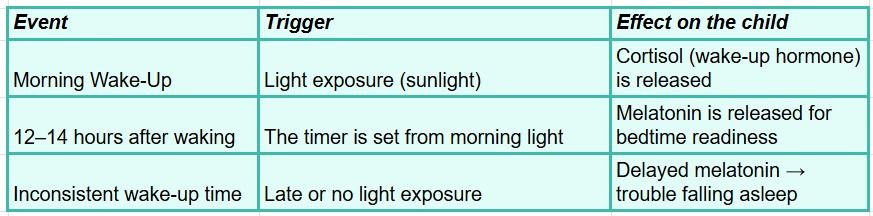
Sleep Mistake 4: Routine Roulette
Many parents know a bedtime routine can make nights smoother. And research confirms it: children with consistent bedtime routines fall asleep faster, wake up less, and sleep longer.
But here’s the catch: it only works when it’s consistent.
The Mistake:
Changing bedtime routines, either night to night or from one caregiver to another, teaches kids that rules are flexible.
What Children Interpret:
- “Different parent, different rules… let’s test the limits.”
- “If I cry, maybe I’ll get one more story.”
This confusion leads to:
- Longer, more stressful bedtimes
- More resistance and meltdowns
- Difficulty settling down for sleep
Pediatricians often guide parents to build structured, emotionally safe, consistent routines that promote healthy sleep. They stress:
- Fixed bedtime and wake-up time
- No negotiations after the routine begins
- A calming environment with low light and no screens
- Parent alignment on the routine sequence
Sleep Mistake 5: The Fear Factor
A child's imagination blossoms between the ages of 2 and 3. Suddenly, they might start seeing monsters under the bed or shadows that “move.” This fear is very real for them and often leads to bedtime resistance, night wakings, or even sleep regressions.
Naturally, many parents turn to nightlights. But here’s the twist: the wrong kind of nightlight can worsen your child’s sleep.
Quick Checklist: Ideal Sleep Setup
✓ Dim red light only
✓ Positioned away from direct view
✓ Enough to see shapes, but not bright enough to read
✓ Familiar objects visible (toys, dresser)
✓ Avoid screen exposure 1 hour before bed
If your child continues to struggle despite all these strategies, you can always schedule your baby’s first visit with a Pristine pediatrician to check for underlying issues and receive personalized guidance.
Even with all the right steps, some nights will still be bumpy. And that’s okay. Your child is learning how to manage fear, trust routines, and feel safe in the dark; and you’re guiding them every step of the way. You may also want to explore a pediatric provider who specializes in autism or ADHD if you suspect that your child’s sleep struggles have underlying causes, like sensory or behavioral conditions.
Frequently Asked Questions (FAQs)
Q1. What are the signs of infant sleep problems?
Ans. The two most common signs that an infant is having sleep problems are: Waking up one or more times at night when sleeping or crying when you leave the room.
Q2. How can I help my baby with sleep problems?
Ans. One of the most important things is to maintain a rigid sleeping schedule. Additionally, you must avoid any screen exposure (1 hour before bedtime) and keep the screens positioned away from direct view.
Q3. What are the hardest months for a baby?
Ans. Generally, the first three to four months are considered the challenging months for parents.
Q4. Why do babies cry at night?
Ans. Babies may wake up and cry at night for various reasons. These reasons can include hunger, a dirty diaper, being too hot or cold, and simply needing comfort and attention.